Category: Blogs

  • Lost in Translation: Why I Started Translating AI for Marketers

    This article is the origin story behind my Lost in Translation series, exploring why marketers need AI translators, not AI jargon.


    Over the past year I’ve noticed something interesting. When marketers ask me about AI, they almost never struggle with the ideas themselves. They struggle with the language. The conversation gets tangled in unfamiliar terms long before it reaches the underlying concepts. Context windows. Embeddings. MCP. Vector databases. Agents. It starts to sound less like a business discussion and more like someone emptied a box of refrigerator magnets onto a whiteboard.

    The funny part is that this isn’t actually a new problem. Product marketing has always been an exercise in translation. We spend our careers standing between specialists and everyone else, taking deeply technical ideas and explaining why they matter. We don’t make the technology simpler. We make it more understandable. That’s a very different job.

    As I found myself explaining AI concepts to colleagues, I realized I was reaching for exactly the same techniques I’d used throughout my career. I wasn’t defining jargon. I was looking for familiar landmarks. A context window became working memory. Prompt engineering started sounding a lot like writing a creative brief. Tokens felt suspiciously similar to media budgets. Once people had something familiar to anchor to, the technical vocabulary stopped feeling intimidating.

    The Real Problem Isn’t AI

    That realization became the spark behind my Lost in Translation series. It wasn’t meant to teach marketers how to become machine learning engineers. There are plenty of people far more qualified to do that. Instead, I wanted to build a bridge between two professions that increasingly need to work together but don’t always share a common language.

    The more I thought about it, the more I realized this has always been one of marketing’s superpowers. We don’t just tell stories. We create shared understanding. The best marketers instinctively search for analogies, metaphors, and familiar experiences that help people connect new ideas to existing knowledge. AI doesn’t change that. If anything, it makes that skill even more valuable.

    Every new technology develops its own vocabulary. Sometimes that’s necessary because the concepts really are new. Other times it’s simply the natural shorthand that develops inside a community of experts. Neither is inherently good or bad, but it does create friction for everyone standing outside that circle.

    Translation reduces that friction.

    An Old Lesson from an Analog World

    There’s another reason this resonated with me, and it has nothing to do with AI.

    As much of a digital native as I pretend to be, I’m really a carpetbagger from the analog world.

    I learned to communicate laying out newspapers. This was back when Aldus was a software company instead of simply a typeface legend. We worked with PMTs, wax strips, X-Acto knives, and galleys. Cut and paste wasn’t a keyboard shortcut. It was Tuesday evening over a light table.

    The most valuable lesson from those years wasn’t typography or page layout. It was editing.

    Every front page had a finite amount of space. Every headline, photograph, pull quote, and story had to justify its existence. If something important deserved to go onto the page, something else had to come off. There was no infinite canvas. You couldn’t solve the problem by making the newspaper larger.

    I’ve come to realize that AI conversations have exactly the same constraint.

    Every Conversation Has a Messaging Budget

    Whether you’re writing a keynote, building a product launch, creating a campaign, or explaining AI to a colleague, you have a finite messaging budget. Every new concept competes for attention. Every acronym consumes cognitive space. Every technical detour risks losing the audience before you’ve reached the point that actually matters.

    That’s one of the reasons I’ve become increasingly interested in what I call a messaging budget. We often talk about adding messages, adding features, adding proof points, adding differentiation. Rarely do we spend enough time deciding what deserves to be removed.

    The same discipline that once forced newspaper editors to choose between two stories now forces modern communicators to decide which AI concepts actually matter for a particular audience.

    Not every good idea belongs in every conversation.

    Translation is the Job

    That’s why these posts aren’t really about AI. They’re about communication.

    They’re about helping marketers realize they already possess many of the skills this new era demands. They know how to understand audiences. They know how to simplify without oversimplifying. They know how to build bridges between experts and everyone else.

    Those aren’t legacy marketing skills. They’re becoming essential AI skills.

    The technology will continue to evolve. New models will appear. New frameworks will replace today’s buzzwords. New acronyms will inevitably find their way into conference presentations and product announcements. Translation, however, is timeless.

    The job has never been to know every technical detail. The job has always been to help people understand why those details matter. That was true when I was cutting galleys apart with an X-Acto knife. It’s just as true now that we’re trying to explain AI.

  • Potatoes, Pride, and Diversity

    Potatoes, Pride, and Diversity

    It inevitably happens every Pride Month – someone trolls one of my personal or our corporate posts harping that we shouldn’t be talking about diversity. And as an aside, so glad that there is a troll emoji in the latest update!  I usually just ignore and block said 🧌, but this time, coming right back from vacation, I had the energy to educate. And while it may be quixotic (as well as mixing metaphors) I thought I would try and explain why diversity is a very good thing for the workplace.

    As an American of recent Irish ancestry I grew up not just having meals where multiple types of potatoes were served, but also hearing about the Irish Potato Famine regularly. As a skeptical kid, I never understood how a crop failure could wreak such havoc  – over one million dead. Only as an adult did I fully understand, and it taught me a valuable lesson about diversity.  

    I remember seeing the ancestral family land with adult eyes a decade ago and wondering how they could raise 12 children to adulthood on such poor, rocky soil. The answer was the potato. It is hardy, nutritious, calorie-dense, and easy to grow in Irish soil. By the mid-1800s nearly half of Ireland’s population relied almost exclusively on potatoes for their diet, and the rest incorporated it regularly in their diets.

    But in the 1800s, Irish farmers became entirely dependent upon one type of potato – the Irish Lumper. The Lumper flourishes in nutrient-poor and wet soil and was adapted to growing conditions in Ireland, particularly western Ireland. Lumpers were grown from clones of one another – monoculture – that were well adapted to the local conditions and helped feed the growing Irish population. As long as conditions were good. 

    But when the environment changed and the blight swept through the country in the 1840s, the potatoes and the Irish population dependent on them were devastated. The genetically identical Lumpers were all very susceptible to blight, which turned them into inedible slime. Because Ireland was so dependent on this one strain of potato, one in eight Irish people died of starvation in three years during the Irish potato famine of the 1840s.

    Yes, I know that was a long introduction and more than enough discussion of potatoes to push your glycemic index to dangerous levels.  But, just like evolutionary theory teaches us that populations with low genetic variation like the Lumper are more vulnerable to changing environmental conditions than diverse populations, the same is true in the workplace. 

    When we think about team dynamics and workplace productivity, it’s easy to get trapped in the idea that quick alignment is the best path to success. And it is true that a consistent corporate culture is shown to have a positive effect on productivity. It can also be easier to build a team if everyone comes from the same background, is the same gender, has similar education, and other common characteristics. 

    But there’s a dark side to the “monoculture” mentality, and it is dangerous to let its blight infect your team or company – groupthink.  Groupthink is the tendency for members in a given group to gradually drift toward the same beliefs and styles of thinking. It has been shown to lead to conformity of thought, resistance to change, and rejection of potential risk. There are numerous business cases documenting groupthink failures or near failures, because teams and companies aligned their views too narrowly, ignored upstart competition, and were reinforced by groupthink. Bottled water would never be a threat to the soft drink industry, the iPhone didn’t have a keyboard and couldn’t compete with Blackberry, and even the ice shipping industry of the 1800s turned down the patent for ice-making machines because that wasn’t their business.

    The best way to build an agile business that can weather the inevitable market and technology changes is to encourage diversity of thought, and the easiest way to build that is to bring together people from diverse backgrounds and create an environment where they can voice their opinions to contribute new approaches. Even just having someone challenge preconceived notions can help make a business plan more sound. With highly diverse teams, contrary opinions will be more commonly voiced, helping break the myopia of groupthink and enabling great ideas to turn into great products that meet and adapt to market needs.

    I can think of countless examples of times when someone from a different work, environmental, educational, gender, etc… background raised a point about a product plan that made the team rethink how we developed it or took it to market and ended up making the project more successful.  

    So, my dear Lumper Troll, this is why companies care about and foster diversity. 

  • Top X Things You Need to Know About WEKA X

    Top X Things You Need to Know About WEKA X

    (repost from https://www.weka.io/blog/)
    Today we announced the launch of our new global channel partner program – WEKA X – that lets our value-added resellers (VARs), system integrators (SIs), and managed service providers (MSPs) take advantage of a comprehensive toolkit of training, certifications, exclusive pricing, and incentives to streamline deal registration and help to build a profitable business with WEKA.

    I am super excited about the program and the feedback from our partners who have previewed it and could go on forever about the benefits and details. And since “X” is a long-standing way to represent the number 10, I decided to let “X” both guide how I told you more about the program and be the star of the post.

    X.  The “X” in WEKA X stands for, wait for it…

    I keep getting asked about the “X” in WEKA X and it’s a simple answer: X factor. WEKA is the X factor partners need to get deals done. The WEKA Data Platform provides an advanced architectural approach that can be the difference for companies trying to accelerate their business, and for the resellers helping those companies transform how they approach these workloads. The WEKA Data Platform was born in the cloud and is the only data platform that can seamlessly and sustainably meet the performance and scale demands of next-generation workloads on-premises, in the cloud, at the edge, and in hybrid environments.

    IX.  Customers are at a X-roads and need help

    We are at a crossroads where organizations of all sizes have significantly increased their investment rate in next-generation technologies such as AI, ML and HPC to solve challenges, fuel research and discovery, and innovate new business models. But they are struggling with where to invest. Gartner, for example, estimates that 85% of AI projects fail. WEKA brings a data platform combined with the expertise of our channel partners to dramatically reduce the risk on these projects and deliver successful outcomes for customers.

    VIII.  Legacy approaches are X_X

    Traditional infrastructure, architectures, and data management approaches can’t keep up with the requirements of these next-generation applications and workloads and are one of the reasons for the failures mentioned above. This is paving the way for a full-stack overhaul (CPU to GPU, VMs to containers, on-prem to hybrid cloud, etc) that presents a significant opportunity for the channel.

    VII.  It’s all about Xceptional customer outcomes

    To help customers evolve into AI-driven organizations quickly and build core-to-edge-to-cloud data pipelines, partners need new technology, education and training. At WEKA, we have a proven track record of bringing technology to customers that is highly impactful to their operations and infrastructure. WEKA X now pulls extensive partner expertise into the equation to help de-risk everything from purchasing and architecture to planning and deployment, and to help understand what is needed to create the best outcomes.

    VI.  Xtreme opportunity

    AI adoption has skyrocketed over the last 18 months. Previously only the largest companies were focused on AI, but now companies of all sizes are taking on AI projects. AI spending in the United States is projected to double by 2025 to $120 billion. WEKA’s expertise in enabling some of the most successful AI, ML and HPC solutions will help our partners open the doors to new opportunities with customers.

    V.  What is the f(X)?

    In math and common parlance, “x” can represent the unknown. But not with WEKA X, where the function of “X” is to stand for all the education, tools, training, and more that we provide our partners to help them deliver successful solutions built on WEKA for performance-intensive workloads such as AI and HPC.

    IV.  eXascale solutions

    WEKA is known for performance, purpose-built for the most extreme and demanding workloads on the planet. But did you know that the extreme “Impossible” workloads are also typically characterized by massive scale? Being able to handle exabytes of data with billions of files accessed by thousands of servers is a new challenge as data grows exponentially. WEKA partner expertise in these areas is critical to making these exascale projects successful.

    III.  Solve for X where Y = great partners

    WEKA X is designed to help partners and customers be as successful as possible. By ensuring partners have comprehensive training and are capable of delivering top-notch solutions – and outcomes – the opportunities for partners to grow are fantastic. Customers reap the benefits as well by being able to choose best-of-breed expertise on solutions for infrastructure as well as applications and code that are integrated into customer workflows.

    II.  X2: The power of two

    There is power in numbers, strength in numbers, and success in numbers. WEKA X not only represents a new and exciting program for our partners, but it enables the power of both WEKA and our partners’ teams to provide customers the benefit of our combined experience with and knowledge of cloud, hybrid, and on-premises solutions. X to the power of 2 is focused on our customers’ continued success to meet and exceed their goals and objectives for their organizations.

    I.  X marks the spot for success

    In addition to being an ode to X, this is a set of X reasons why the WEKA X Partner Program delivers an optimized partner experience to help our resellers take advantage of our game-changing WEKA Data Platform and the tremendous market opportunity for compute-intensive workloads. WEKA X is an important step forward in making it easier for partners to get WEKA into customers’ hands and make them successful.

    Learn more about the WEKA X Partner Program

  • I No Longer Work at a Storage Company…

    I No Longer Work at a Storage Company…

    …and 5 Facts to Back That Up

    I started a new job at WEKA late last year and received a lot of compliments here and IRL. But every so often I would get a message or be pulled into a conversation that mentioned me working at yet another storage company which led to a conversation about what WEKA actually helps customers do. I’ve responded in private quite a few times, so I decided to write a post about it.

    Let’s get this straight: While I am proud of the kick ass work I have done at storage companies over the last 20 years, I am not working at another storage company! WEKA is a Data Platform company and one focused on AI and other modern, high performance workloads. And no, “Data Platform” is not marketing buzzwords meant to make old technology seem more appealing. We really are very different from the storage companies I have worked at. And here are 5 reasons why!

    #1 First and foremost, we don’t sell disks. 

    WEKA sells software as a subscription that is highly scalable and easy to deploy, configure, manage, and expand – be it on-premises or in the cloud. On-premises, we are hardware agnostic and able to run on almost every hardware out there – from multiple server vendors, with multiple types of NVMEs drive, using multiple CPU choices, feeding data to multiple types of GPUs, and on multiple clouds. The WEKA Data Platform runs on servers from our customers’ preferred vendors and can be bought in bundles from them too. This makes ordering and managing it much simpler than a separate storage appliance. Our software can be deployed on standalone server nodes or for zero extra footprint in a “converged” configuration on the servers that run the workloads.

    #2 We are a cloud software company – who also run on-premises. 

    I mentioned cloud above, but it deserves a full call out. The WEKA Data Platform was designed to be cloud first and then ported to on-premises. And as a result, it allows for total data portability and management across multiple environments – cloud or on-premises or both. Try getting the same <insert legacy storage array name here> experience in AWS and on premises. And for bonus points, try enabling hybrid workflows between them! WEKA gives customers a consistent data platform across any environment, be it on premises, in the cloud or both. And too often “hybrid storage” means limited cloud capabilities like snapshots or backup. WEKA customers are using the data platform for a plethora of cloud uses – bursting from on-premises to the cloud as needed, supporting sophisticated hybrid AI workflows, and migrating workloads to AWS Outposts or the AWS cloud.

    #3 We treat all types of workloads equally – blazingly fast. 

    Storage systems are usually architected to excel in a limited number of performance dimensions while others languish, requiring different storage arrays for different workloads. But WEKA performs across all dimensions without the need for tuning or re-configuration, customers can run any part of their data pipeline on a single system, whether it requires massive IOPS with small reads and writes, or massive throughput and 10’s to 100’s of GB/sec. But it’s not the speed that is important – it’s what it means for our customers. It allows them to have just one storage system for the entire data pipeline and save money from having to buy and manage multiple storage arrays and equally as important saving time from constantly copying data between them. 

    #4) We evolve as fast as our customers’ needs do. 

    Traditional infrastructure can take months to years to change. New hardware support or networking protocols are often only implemented in storage arrays years after they are released to the market.  And to get new features you often have to undergo painful data migrations and hardware swaps. We don’t lock customers into specific hardware platforms or previous generations of technology. Platforms are designed to be future proof  to be extensible and evolve with customer needs to take advantage of new innovations so their business and research can benefit. The WEKA Data Platform is designed to evolve at the speed of science to let customers quickly, easily and non-disruptively adopt new technology. 

    #5) We are faster than a storage array and we are even faster than local NVMe storage – by up to 3X! 

    Local storage means local resources only. We parallelize and gang together more NVMe resources than can fit in a single chassis, add a high performance networking stack as well as kernel bypass to service high performance workloads faster than local storage. A WEKA cluster can deliver up to 162GB/Sec & 1M IOPs to a single GPU client. Earlier this year, Samsung Datacenter Technology and Cloud Solutions used WEKA to bring their NVMe drives together in a storage cluster and achieved new number 1 records for 4 of the 5 SPEC Storage2020 audited benchmarks, all using an identical configuration across varied datasets and IO types. Yes, it’s a storage benchmark, but until a Data Platform benchmark is created it’s what we have to work with.

    I am very excited for my next, non-storage adventure at WEKA. If you want to learn more about the data platform, why not try it in AWS right now by going to https://start.weka.io. In addition to all the great benefits we bring to customers, I am working with a team of the best-of-the best from across our industry. And I am going to be hiring product marketers and technical marketers VERY soon so stay tuned for job postings.

  • Rewriting the Genetic Code of Storage

    Rewriting the Genetic Code of Storage

    (reposted from www.hitachivantara.com/blog/)

    Rapid, near-constant change is the defining state of today’s modern, digitally transformed business environment. As the past year has made painfully clear, it is time for a storage infrastructure and a storage strategy that can rapidly adapt. Such flexibility is essential to support the requirements brought about by new business conditions. Storage must enable business change and not be a disruption that slows or prevents progress.

    Evolutionary biology offers students of storage an interesting analogy. First posited by Stephen Jay Gould, punctuated equilibrium suggests that changes in species are not the result of slow incremental processes over millions of years, as previously supposed. Species instead undergo rapid, radical change in very compressed times periods in response to extreme pressure. Anything unable to adapt quickly is pushed out of its niche, fated to die out. After such periods, the world stabilizes, but it is fundamentally different.

    Incremental change while maintaining business resiliency has so far defined the history of data storage. Subtle improvements introduced over long periods of time have been the norm.

    That long period of stability is at an end. Business conditions are changing rapidly in many dimensions. The pandemic dramatically expanded the footprint of remote work. Cloud adoption, digital transformation, and dramatic disruption of operations are surging inexorably across many industries. Apps and rapid delivery have replaced visits to stores. Virtual collaboration has replaced in-person meetings. A virtual desktop streamed from the cloud that runs on any handy lightweight device replaces a powerful desktop computer.

    Stability has been the watchword in storage. Now the world needs its storage architectures to evolve quickly AND be stable. Today’s storage architecture must assume that change is the normal state of things. Storage arrays must be primed to support an ever-shifting mix of performance and cost requirements. Whether arrays target high-performance, balanced cost-performance, or lower-cost needs, all need to respond to the pressure of change. Even the end of a storage array’s life should be painless, with the transition to new arrays taking a matter of hours or days, not weeks or months, and never imposing disruption.

    Change is constant, and when it comes to storage arrays, it should be effortless. It should not introduce additional risk to your business. Three characteristics define the storage species emerging from the pressures of the era of change: efficiency, resiliency and agility. While all three terms are deeply ingrained in the DNA of storage, evolutionary pressure is hard at work to dramatically rewrite the code that defines each.

    Resiliency for When Things Go Wrong

    Way back in 1999, a single stroke of a backhoe digging earth brought the internet to a standstill for much of the Eastern United States. While a problem for some businesses, it merely inconvenienced many others at the time. Today such an occurrence would bring nearly every business affected to a standstill.

    Things can and will go wrong, and businesses can’t simply shut down when they happen. The ability to serve data at speed under any circumstances is not “nice to have.” It is essential to the survival of every business, regardless of its size. Things are going to happen. Performance under adversity has to be built into the genetic code of modern storage arrays.

    Also associated with resiliency is an awareness that all things have a useful life span. Technology constantly moves forward. Components wear out. Accidents happen. A business can’t just hang an “out to lunch” sign on its window when its infrastructure needs maintenance or upgrades. Storage arrays must be predictable no matter what happens. Punctuated equilibrium tells us that something big is going to happen and that event will force change. We may not know what it is or when it will happen, but we can design storage arrays prepared to continue to perform even as they undergo rapid evolutionary change.

    Efficiency Is About More Than Cost

    Data is being produced in ever-increasing quantities and at a rate that far exceeds the resources available at most organizations. Storage arrays must adapt to make it possible to store more data at a lower cost. That is a more complex challenge than simply making physical storage devices less costly. Storage arrays must offer choices of hardware and software that allow one array to offer numerous price/performance tiers.

    Efficiency is also a product of managing the increasing quantity of data without requiring an ever-increasing number of people to do the managing. Just as the transportation infrastructure is looking to autonomous cars, the world needs more self-driving storage infrastructure. Self-driving cars are expected to make travel safer by getting slow-reacting humans out of the driver’s seat. Similarly, in an increasingly congested digital world overrun with data, we need to leverage new technologies such as AI and machine learning to reduce the need for people to handle the care and feeding of storage constantly.

    In a world of constant change, we also need to consider how storage is acquired and deployed. Storage needs may be increasing, but an organization needs different types of storage at different times. Storage not optimized to current needs is inherently inefficient. Changing businesses need new ways to obtain the storage they need and then switch to different storage quickly when their requirements change.

    Agility Is the Key to Opportunity

    Punctuated equilibrium is not just about asteroid strikes and volcanic eruptions. It also embraces opportunism, allowing a species to swell into a new niche to make the most of some new resource. Storage agility is correlated with opportunity, empowering a business to adapt to take advantage of trends and change quickly. It’s how business thrives.

    Today’s businesses amas vast amounts of data, but not all data is the same. Some data is “cold data,” preserved for archiving, retention, backup, governance, and so forth. Then there is “hot data,” the stuff that actively courses through the veins of the business every day. While hot data has immediate, tangible value, there is no telling when cold data may suddenly be part of a hot opportunity. Storage platforms need to be able to morph to suit the rapid-fire pace of change. That may entail suddenly serving more users as the products of a business line change. As seen during the pandemic, businesses that formerly were primarily face-to-face operations now find themselves conducting predominantly online operations. Business patterns change, and storage platforms need the agility to support the business wherever it needs to go.

    At Hitachi, resiliency, agility and efficiency are what we think about today as we rewrite the genetic code of storage technology. Our objective is to enable your business to make the most of today’s evolutionary opportunities to emerge at the top of tomorrow’s phylogenetic tree.

  • Make Your Resume Even More Compelling with FlashStack™

    Make Your Resume Even More Compelling with FlashStack™

    (repost from blog.purestorage.com)

    I love my work and spend a lot of time talking to people about converged infrastructure (CI) with friends, colleagues and customers. While almost everyone I talk to gets the value of buying a pre-built, pre-tested IT infrastructure platform that can be online supporting business applications in hours instead of weeks or months – every now and then I run into a skeptic.

    They stop me while I am talking – some may say preaching – about the greater business agility, the lower total cost of ownership, the better availability and most of all the confidence that comes from buying an outcome instead of buying components that need to be integrated before they can start supporting business workloads.

    And their objections are inevitably the same. “But,” that rare skeptic interjects, “why should I buy a pre-integrated solution, when I can assemble it myself? I have the skills to be my own systems integrator. I have many years of doing this type of server, storage and network configuration. I want to know exactly what the various settings are. I want to turn all the nerd knobs myself.” Ok, they never say the last part, but that is really the gist of their objections.

    After a few failed attempts to challenge these doubting Thomases directly I hit upon the best way to get them to quickly see the real value of converged infrastructure. “What does it say on your resume?” I counter. “Do you describe your job accomplishments as ‘built servers, racked and stacked storage and switches, cabled systems together, verified configuration, scoured the internet to determine compatibility of patches?’ Or, do you say you achieved things like ‘scaled infrastructure to support 2x business growth, reduced time to market by 83% for new application deployment, implemented efficiencies leading to 62% cost savings, and increased uptime to drive incremental revenue?’ Converged infrastructure lets you stop doing the former so you can focus on the latter. CI in essence, helps emphasize the value of business results on your resume.” And then they get it.

    Cisco and Pure Storage can help you have a more compelling resume with FlashStack™, a modern converged infrastructure (CI) solution that is virtual machine-aware and hybrid cloud-ready, yet retains the predictability and efficiency advantages of dedicated compute and storage tiers. With FlashStack, customers can modernize their operational model, stay ahead of business demands, and protect and secure their applications and data, regardless of the deployment model on premises, at the edge, or in the cloud. With thousands of deployments in over 30 countries around the world, FlashStack continues to grow significantly year over year.

    And this week we announced enhancements to the FlashStack family that extend its benefits to more use cases and more resumes.

    Add Modernizing Oracle Data Warehouse to Your Resume

    Data warehouse deployments can be extremely complicated in nature and customers face enormous challenges in maintaining these landscapes in terms of time, effort, and cost. These databases are often the mission critical components of a customer’s business. For best performance, data warehouses need a system that is architected for the bandwidth to deliver multi-dimensional query performance. Ensuring availability and lowering TCO are also top priorities – making this a perfect use case for converged infrastructure.

    To address these challenges we have expanded the FlashStack™ family to include new configurations with Pure Storage FlashBlade™. FlashBlade is architected to be massively parallel and eliminating serial bottlenecks that hold data back. FlashStack with FlashBlade is the converged infrastructure solution for delivering both the performance and capacity needed for a modern data warehouse with Oracle databases. It is a fully integrated solution that delivers industry-leading performance for Oracle Data warehouses and is validated by Cisco and Pure Storage. FlashStack with FlashBlade can optionally be integrated with a Cisco Application Centric Infrastructure (ACI) software defined network for greater data center automation and application agility. It is also a converged infrastructure solution to address other other use cases that require data parallelism such as modern analytics and AI.

    FlashStack for Oracle Data Warehouse

    Capacity efficiency* 1.5 PB in 4U*
    Reads Up 16GB/s
    Writes Up to 3.9GB/s
    Database load rate (ETL) Up to 13TB/hr
    *1.5PB Effective capacity based upon 3:1 average data reduction


    <h3>Employers Are Looking for Application Skills

    Organizations are looking for turnkey outcomes for more than infrastructure. They want to confidently and quickly onboard users, optimize workloads, and deliver secure, rich content to a broad and geographically diverse user base. With FlashStack, they can leverage a large portfolio of Cisco Validated Designs (CVDs) to simplify deployment and management of workloads such as SAP, Oracle, Microsoft, VDI, and more.

    FlashStack Virtual Server Infrastructure with Cisco ACI and FlashArray//X

    Using this validated design customers can quickly and reliably deploy FlashStack with Cisco ACI and FlashArray//X to support today’s dynamic applications. ACI leverages a network fabric that employs industry proven protocols coupled with innovative technologies to create a flexible, scalable, and highly available architecture of low-latency, high-bandwidth links. This fabric delivers application instantiations using profiles that house the requisite characteristics to securely enable end-to-end connectivity. FlashStack in ACI environments provides centralized, policy-defined automation management, multi-tenancy, seamless networking infrastructure for running both modern and traditional applications, and optimal network security and operational efficiency without the need to manually create and maintain policies or learn new programming languages.

    FlashStack Virtual Desktop Infrastructure with Horizon 7 and Flash Array//X

    Although virtual desktops are inherently more secure than their physical predecessors, they introduce new challenges. This new Cisco Validated Design based on VMware Horizon 7 provides demonstrated scalability and performance alongside quick and predictably deployment Horizon 7 for up to 5000 desktops. FlashStack helps maintain data availability and optimal performance during boot and login storms as part of the Cisco Desktop Virtualization Solutions. And FlashStack’s disaggregated architecture allows you to scale all of your components extremely efficiently and non-disruptively as your VDI environment grows.

    Do an Informational Interview with FlashStack SmartConfig

    We are also providing a preview of FlashStack™ SmartConfig which will simplify the deployment and maintenance of the extensible and continuously available, Cisco validated FlashStack solution so customers can move to a modern, flexible data centric architecture with confidence. FlashStack

    SmartConfig will make it easier for customers to deploy, expand and maintain FlashStack solutions. It is the easiest way to deploy FlashStack all-flash converged infrastructure, automating hardware configuration and software provisioning so you are ready to deploy workloads in minutes.

    This preview of FlashStack SmartConfig automates the Day-0 deployment and initial configuration of all FlashStack components and configures hardware and hypervisor to adhere to best practices to ensure compatibility. It minimizes risk by configuring the hardware and hypervisor components following Cisco Validated Design foundation to ensure that the system uses the latest supported firmware and hypervisor software reducing implementation risk and providing a proven delivery of infrastructure.

    Put FlashStack in Your Data Center and on Your Resume

    FlashStack converged infrastructure delivers maximum performance and reliability for business-critical applications, DevOps, and modern analytics – right out of the box. It has helped thousands of customers globally in over 40 countries reduce the infrastructure sprawl and complexity kept their IT teams from being able to focus on innovation and business growth. And, it gives them a more compelling resume!

  • Evolve Your Data Center With New 32G MDS Fibre Channel Switches from Cisco

    Evolve Your Data Center With New 32G MDS Fibre Channel Switches from Cisco

    (reposted from blog.purestorage.com)

    That we live in a world of constant change is a long accepted truism. Heraclitus of Ephesus, declared over 2,500 years ago that ever-present change is the fundamental essence of the universe – and this is doubly true for the technology realm. We have grown accustomed to new technology debuting at an ever-accelerating pace, promising to radically change our personal and work lives for the better.

    Yet, for technical change to be successful at delivering on this promise, it needs to be the right kind of change. Simply making things faster or more powerful is insufficient and often counterproductive. This type of change often increases complexity, decreases reliability and results in overall lower efficiency. Successful technical change is not just faster and more powerful, but smarter as well. It needs to be easier to use and make us more agile.

    The technologies you choose for your modern data centers need to introduce this “right” kind of change. The highly dense, virtualized compute and storage you are deploying demand both performance and agility – you have told us you need highly scalable solutions that are also simple to manage, self-driving and self-healing. The modern data centers you are managing and building demand higher network speeds required for hyperscale virtualization, software-defined data center architectures and high performance storage technologies based on flash – while expecting underlying infrastructure to deliver a cloud-like experience that is simple, agile, on-demand, and elastic.

    At Pure Storage we believe in delivering self-driving solutions that help you shift from the endless cycle of reactive troubleshooting to spending time automating and orchestrating the infrastructure to deliver data-as-a-service – on-demand – to your development teams. And we aren’t alone in this belief. Today, our partner Cisco introduced two new 32G MDS 9000 Fibre Channel fixed-configuration switches for your modern Storage Area Network (SAN) that deliver greater performance while enabling simpler, more agile operations.

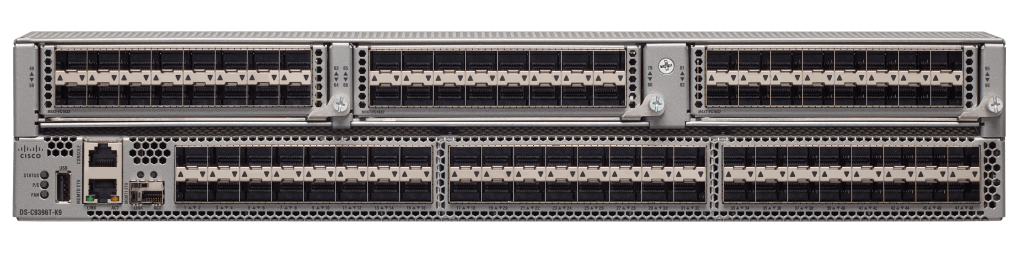
    These next-generation MDS 32G switches enable scale, performance, visibility and operational excellence for efficient deployment of next-generation workloads. The two new Cisco MDS 9000 switches (the 48-Port MDS 9148T and 96-Port MDS 9396T) feature auto-zoning that facilitate detection of new host and storage devices to eliminate the pain and potential errors of manual zoning. They also allow operators to stay on top of all-flash array performance objectives by proactively monitoring for issues that could affect IO performance.

    In addition to the next-generation switches, Cisco also announced the MDS Diagnostics suite and Cisco Data Center Network Manager (DCNM 11.0) that further streamline operations:

    • The MDS Diagnostics provides the fabric-wide visibility needed to guarantee continuous fabric availability for a diverse set of apps and workloads in the modern data center.
    • Cisco Data Center Network Manager (DCNM 11.0) includes an enhanced UI with new features to greatly enhance the support and management of the MDS product line. This features a complete redesign of the VSAN and Port Channel management to better align with typical customer workflows as well as simplify the end-to-end topology management that includes including virtual machine manager visualization.

    As your data center infrastructure continues to change, make sure that it is the right kind of change – one that delivers a cloud-inspired data experience to all your environments, enables a big leap in performance beyond your current architecture and provides cost-effective economics. The combination of Pure Storage and Cisco MDS 9000 enables the scale, performance, visibility and operational excellence for efficient deployment of all your next-generation workloads.

  • Lock Your Customers in a Room and Make ‘Em Learn

    Lock Your Customers in a Room and Make ‘Em Learn

    Reposted from  blogs.vce.com on May 23, 2017

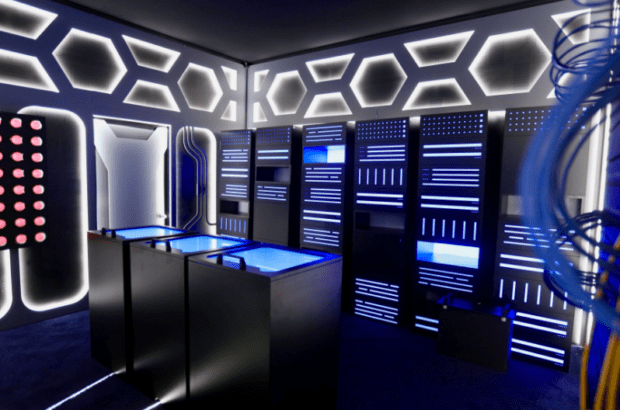
    You’ve just left the CPSD booth, and entered a room humming with LEDs. There is a series of buttons to your right. To your left, a half assembled network patch panel. And was that a server cabinet behind you? You begin to think about quickly leaving Las Vegas when the door closes behind you and your team. You’re trapped. A display springs to life.

    A woman in a white lab coat briefs you. The app your company just launched is a success beyond anyone’s expectations. Hooray right? Well, sort of. She goes on to inform you that the user demand is so great that your infrastructure is about to crash (which will mean very bad things for you and the company). Fortunately, you have in your possession one prototype VxRail node—all you have to do is deploy it in time.

    A digital display above the screen begins to tick away… 10:00… 9:59… 9:58… The gauntlet has been thrown down. Will you get out in time???

    Now as cool as this experience was, the cooler part was the experiential learning that took place inside the room. Successfully completing a puzzle triggered the next video setting off another challenge. Woven throughout the videos was all manner of VxRail goodness. Participants learned how to update the software running on a VxRail Appliance with the click of a button, saw VxRail Manager auto detect a new node when it was cabled up to the network, and experienced how easy it is to scale out additional nodes. A little work, a little play–what can I say? That’s just what happens in Vegas.

    Over 500 attendees put their wits to the test, puzzling their way through The Great Xscape. We designed the escape room to be challenging, and our partners and customers rose to the occasion. Each day’s fastest team won Dell laptops. And even those teams that ran out of time still left with smiles on their faces (and swag in their pockets).

     What’s that? You’re feeling a bit of fear and loathing because you didn’t have a go at The Great Xscape? Not to worry–just plan to meet me in Las Vegas in August. We’ll be at the Mandalay Bay Resort and Casino for VMworld with a slew of exciting product announcements and our escape room in tow. In the meantime, we’re going to huddle up with our team of mad scientists–we have 21 ideas for how to make The Great Xscape even better. Viva Las Vegas.

  • What’s Your Vector, Victor?

    What’s Your Vector, Victor?

    Reposted from blogs.vce.com on May 19, 2017

    How to fasten a seat belt, when to inflate your life jacket, where to find the closest emergency exit – as a frequent traveler, I listen to these droning pre-flight instructions (and the occasional snarky one) at least once a week. Surely the FAA can’t be serious with the constant reminders for these simple things interrupting our Kindle reading, last-minute texting, or jive talking? It turns out they are serious – and stop calling me Shirley. Humans are fallible, forgetful, and error prone. There have been emergency evacuations where passengers and crew couldn’t get out of their seat belts; and in the US Air 1549 flight that crashed landed in the Hudson River, only four passengers of 150 were able to correctly put on a life vest.

    The same is true for technology. Whether we assume that it’s magic and the laws of physics don’t apply, we overlook the simple things, or we just picked the wrong week to quit smoking, we often forget that deploying technology requires some prep work. Even the most automated solution needs a bit of manual inflation. A computer requires power and therefore power outlets. If you are plugging into a network, you definitely need a switch, cables, and IP addresses. And you have to make some decisions about how and where you are going to put it – some data centers charge extra for the emergency exit row.

    VxRail’s “autopilot” setup significantly reduces the complexity of deploying hyper-converged infrastructure (HCI) such that it can easily be installed in a fraction of an hour. But, there are a few simple things that if not part of your pre-flight checklist may have you yelling “Mayday” (and not for the Russian holiday with parades and hot hors d’oeuvres).

    We want to make the VxRail Appliance experience the best it can be. With a year of deployments under our belt, we looked at where people occasionally trip up and found them to be in a few categories:

    • Physical preparation – where do I put my appliance and how do I plug it in
    • Networking – how do I prepare my network so the nodes can talk to each other?
    • Deployment Choices – which vSphere version do I want to use? Do I want to use the VxRail vCenter or will I integrate it with my existing vCenter?

    We asked our customers how we could best remind them about the actions they needed to take – and the decisions they needed to make ­– to get ready for an HCI appliance deployment. You told us that a complicated approval process (“the white zone is for immediate installation and deployment, there is no installation if you are in the red zone”) was overkill. What you wanted was a gentle reminder of the few things you needed to prepare.

    So, for all of you frequent HCI fliers, we made this VxRail “pre-flight” video. Please turn your phone off and kindly direct your attention to YouTube:

    Xperts Shannon Champion (@smchampion) and Jason Marques (@vWhipperSnapper), will direct you through what is needed to ensure the smoothest and fastest VxRail deployment possible. They cover the key choices you have to make, discuss things you should do before your appliance arrives, and point out with aplomb where to go to learn more.

    We hope you enjoy the pre-flight video. You will also find the topics covered in the video and the other information located in the seat pocket on our website at:

    If you have any questions, please press the call button, and one of our Xpert crew members will assist you. Now sit back, enjoy your VxRail HCI experience, quit your jive talkin’, and watch some gladiator movies.

    Roger? Over and out!

  • Become the New Hyper-Converged Hero in Town

    Become the New Hyper-Converged Hero in Town

    Reposted from  on January 19, 2017

    Faster than a speeding data packet! More powerful than a 3.5 GHz processor! Able to conquer complex deployment challenges with a single family of appliances!

    Look up in the sky! It’s a bird! It’s a plane! It’s–

    Ok… so maybe she can’t fly. But she sure knows her way around a data center.

    The Xpert and her crew have arrived, and with them is a VxRail Appliance to fit every use case. Their mission? Glad you asked. Simply put, they are here to empower IT staff everywhere, starting with this video. Empower them to do what, you say? Well that’s the best part…

    The Xpert crew is moving fast, and transforming IT wherever they go. And they want you to be an Xpert too. If you want to spend less time building infrastructure, and more time building your business, join us. If you want to spend less time upgrading software, and more time upgrading revenue, join us. If you want to spend less time dealing with support, and more time supporting exciting new business initiatives, join us.

    Your overwhelmingly strong demand for and interest in VxRail has exceeded all of our expectations. While we’ve been working hard to continually improve VxRail Appliances, we’ve also been looking for ways to continue to support deployments in the field. Which brings me back once again, to the Xpert and her crew.

    Launching today. Right now. In this very blog, is the first installment of the Xpert Video Series. In it, we’ll be tackling important subjects on all things VxRail, the first of which is drive failure. What can I say? Sometimes good drives go bad. It’s not common, but it happens. And when it does, you need to know that your hyper-converged infrastructure is not going to miss a beat. Your data is protected, your VMs remain available, and your business keeps running.

    Don’t worry. VxRail has got your back. Wanna know how? Well we’re happy to show you. We’ve brought in Shannon Champion, one of the founding members of the Xpert crew, to do just that. In Episode I of the Xpert video series, you’ll get an inside look at how your VxRail Appliance handles various drive failure situations without losing data access. What’s more, VxRail can even rebuild a failed drive non-disruptively. Click below to see how it all goes down:

    Don’t worry–we’ve got plenty more where that came from. We’ll be rolling out fresh content nonstop. In fact, Episode II (do you see what I did there?) in the Xpert series is slated to drop next week, so stay frosty.

    If IT Transformation is your game, we’ve got a spot on the Xpert crew with your name on it. All you have to do is show up.

    Until next time…